Understanding Complex Rehab Technology Wheelchair Options
What is CRT?
Complex Rehab Technology involves specialized wheelchairs and mobility devices tailored to individuals with significant disabilities.
Why is Choosing the Right Wheelchair Important?
The right wheelchair can greatly enhance independence, comfort, and quality of life.
Ultralight Manual Wheelchairs

Key Features and Benefits
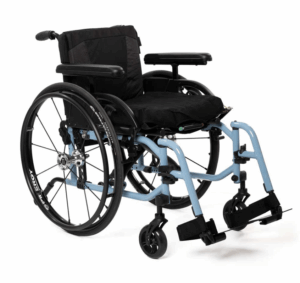
Extremely lightweight frames for easier self-propulsion.
Often made from materials like aluminum or titanium.
Clinical Perspective
Ideal for users with good upper body strength who need a lightweight chair to maintain independence.
Clinicians often recommend these for active users to reduce the risk of repetitive strain injuries.
Typical Users
Individuals who are active and can self-propel for long periods.
Custom seat and back cushions can be selected per the client’s medical history and ICD-10 codes.
Axle wheel adjustments to bring the user’s center of gravity above the wheel center, and off the caster wheel, for maximum propulsion efficiency.
Color selection for personalization has been shown to increase user adoption.
Group 3 Custom Multi-Power Wheelchairs
Advanced Seating and Positioning Needs: Unlike a basic Group 2 Power Wheelchair, Group 3 chairs are often prescribed for individuals who require complex positioning devices to manage pressure relief, postural support, or spasticity.
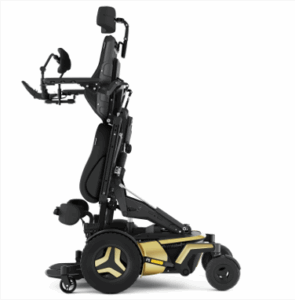
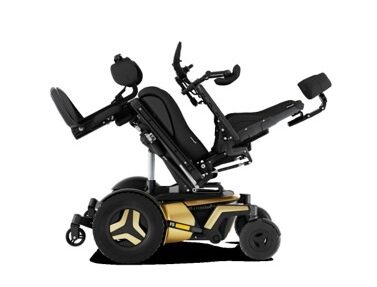
The term “Multi-Power” comes from the power functions that the chair can be designed for (Tilt, Recline, Power Articulating Leg Rests, and Seat Elevation, some even come with Lateral Tilt.
Neurological or Neuromuscular Conditions: These wheelchairs are commonly used by people with conditions such as ALS, MS, or spinal cord injuries who need reliable mobility both indoors and outdoors. Ventilators can be mounted on the back of the PWC and powered by the wheelchair’s batteries.
Specialized Control Interfaces: Group 3 chairs can be fitted with alternative drive controls, such as sip-and-puff, head arrays, and fiber-optic touchpads, for users who can’t use a traditional joystick.